
Understanding the Delphi archaeological site
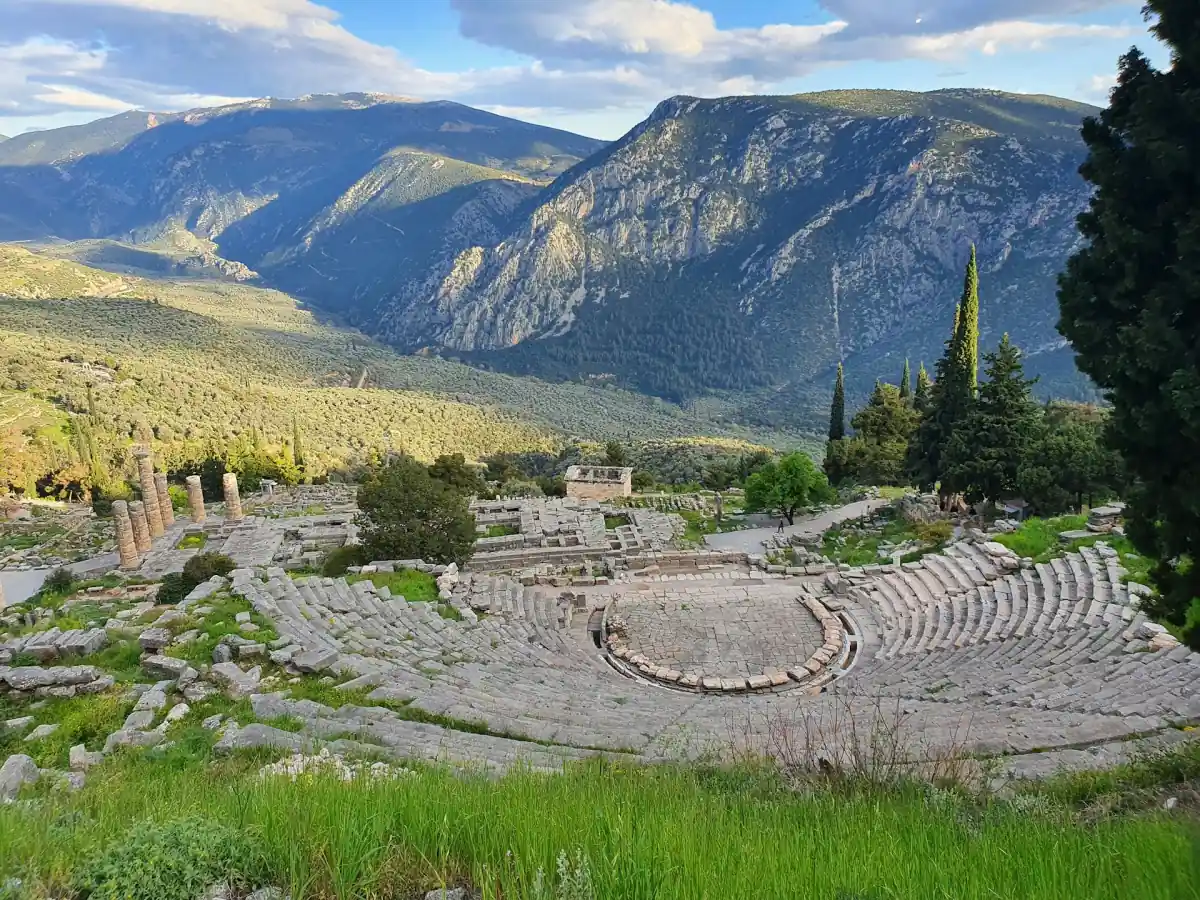
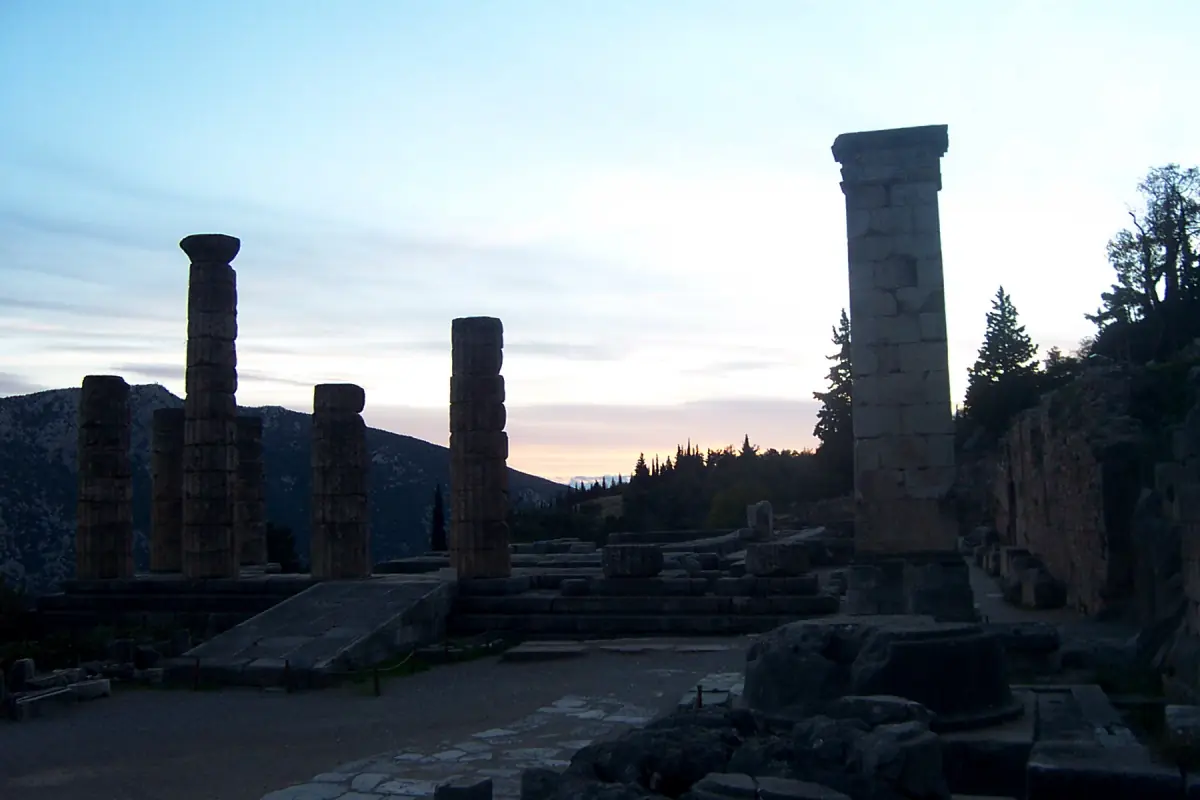
The Delphi archaeological site is a hillside sanctuary where the Sacred Way links treasuries, votive monuments and the Temple of Apollo. Above the temple lies the theatre, while the stadium occupies the highest part of the grounds. Thinking in terms of this rising landscape makes the ruins easier to read than treating each surviving wall as an isolated attraction.
The modern road separates the sanctuary of Apollo to the north from Athena Pronaia to the south. Start by understanding that distinction, especially when matching photographs to places on a map. The circular Tholos belongs to Athena Pronaia; the temple associated with the oracle stands in the larger Apollo sanctuary. The Temple of Apollo guide explains its surviving architecture.
Our picks: exploring the site
The 3D app and English audio offer independent ways to explore. Choose the private archaeological guide for a live visit, with admission depending on the option.
Hand-picked tours, booked through Viator and GetYourGuide. Prices are indicative starting prices in euros (as of October 2026). Tap a tour for live availability and the current price in your currency.
Private archaeological guide in Delphi
- State licensed archaeological guide
- Fully private tour
Admission is included only with the admission-included option.
Check availability →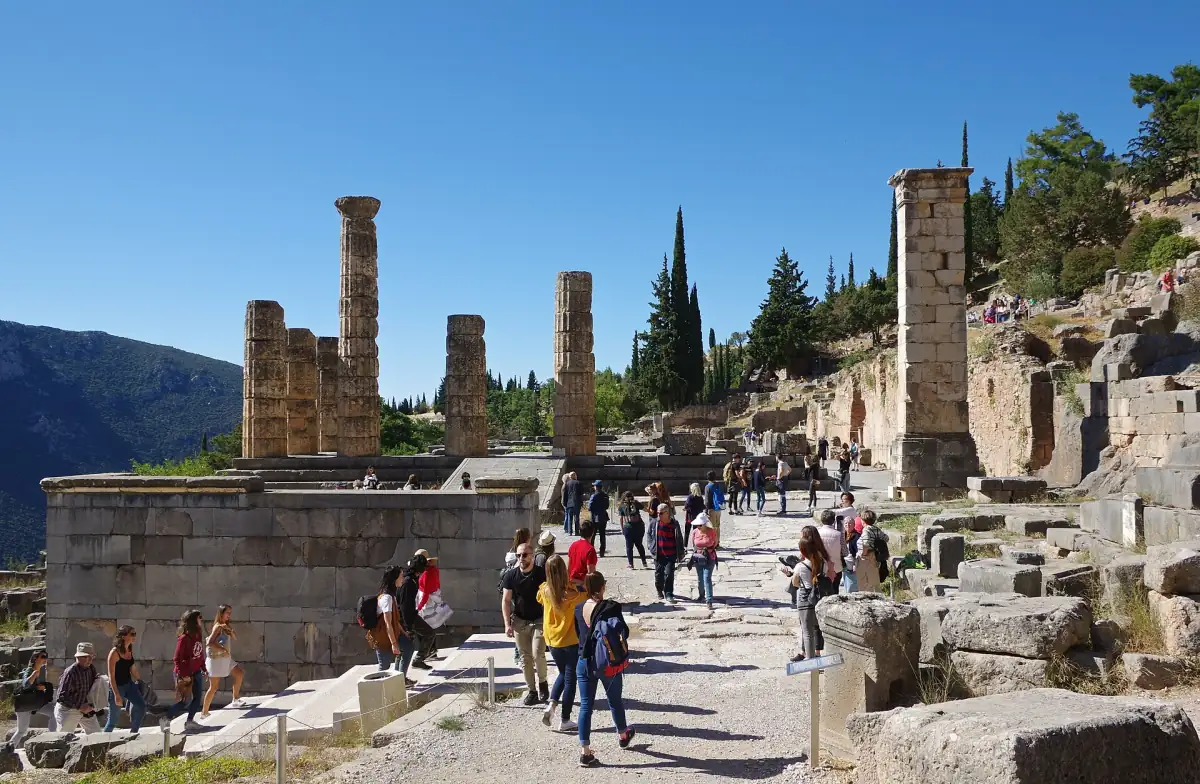
Self-guided site audio for your phone
- Offline text, audio and maps
- Audio tour activation link
The audio tour is in English and does not include admission.
Check availability →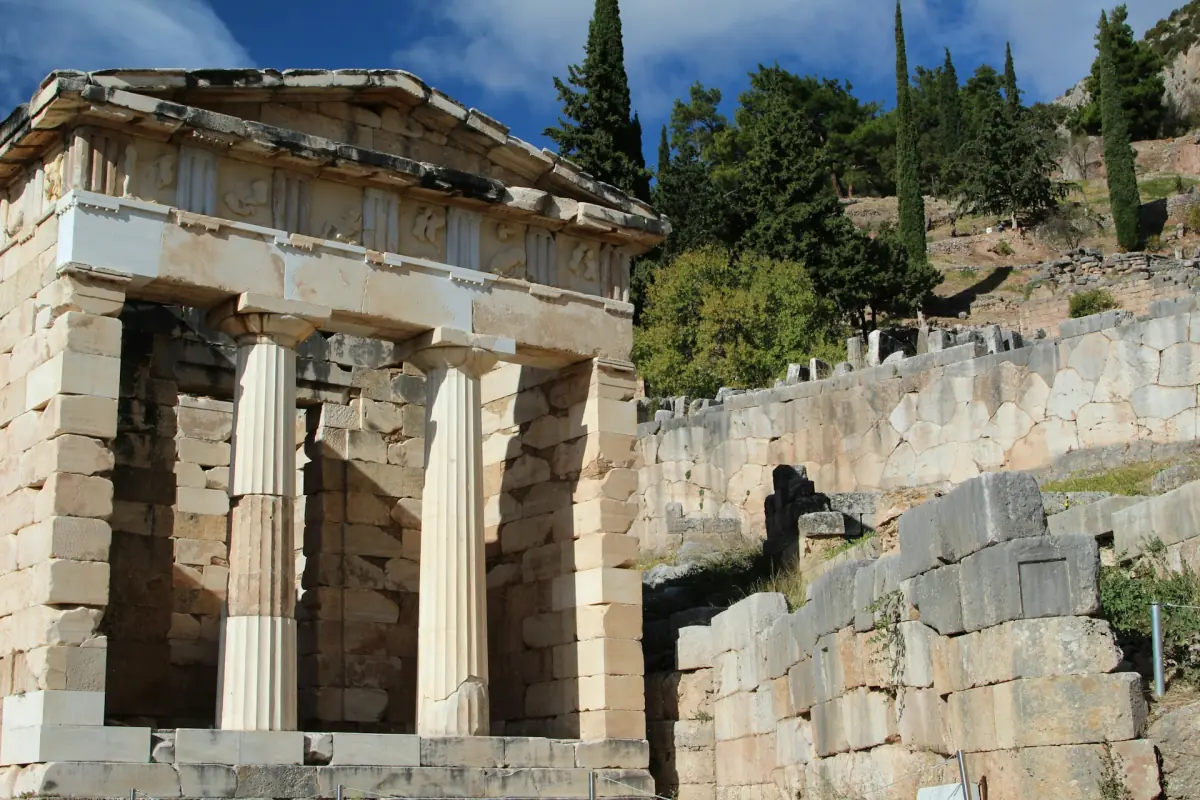
Self-guided Delphi smartphone tour
- 3D reconstructions and panoramas
- Audio narration and text
- Works offline after download
This app does not include admission to the archaeological site.
Check availability →Guided archaeology or independent exploration
A private licensed guide, a 3D smartphone visit and English audio offer different ways to understand the sanctuary; app admission is separate.
Following the Sacred Way
The Sacred Way gives the visit a clear thread. Greek cities placed treasuries and offerings along the approach to the temple, turning religious devotion into a visible statement of connections and standing. Look at the relationship between the route, the buildings and their setting rather than trying to identify every fragment immediately. These structures belonged to a sanctuary with an audience drawn from across the Greek world.
A private visit with a licensed archaeological guide suits travellers who want an explanation alongside the stones. The assigned private guided option starts at the Archaeological Museum of Delphi; admission is included only with its admission option. For independent visitors, the 3D app combines reconstructions, panoramas, short videos, narration and text, with offline use after download. The English audio alternative provides narration, text and maps on a smartphone. Both self-guided products require separate admission.
Theatre above the temple
The theatre occupies the northwestern part of the Apollo sanctuary. Its limestone seating and position above the temple help explain how communal celebrations fitted into the site. The view also makes the relationship between monuments and the mountain setting particularly clear. Follow the visitor route and barriers on the day; the general opening of the sanctuary should not be treated as permission to use every stairway or seating area.
Keep the museum collection in the same plan. Sculpture and votive objects add another level of detail to the foundations outside. The outdoor visit shows where buildings stood, while the collection gives a closer view of what people dedicated and displayed.
Stadium
The stadium lies above the theatre at the highest point of the archaeological grounds. It belongs to the story of the Pythian Games and the sanctuary’s gatherings. A local visitor report dated 31 August 2026, checked on 30 October 2026, reported the stadium closed, together with Athena Pronaia and the Castalian Spring. Plan around the barriers and current notices rather than building the visit around reaching the upper stadium.
Tholos in the sanctuary of Athena Pronaia
The Tholos is a circular building with Doric columns outside and Corinthian half-columns inside. Its original purpose remains uncertain. It is a separate monument from both Apollo’s temple and the Athena temple, even though photographs often make it the visual shorthand for Delphi. The same dated local report described Athena Pronaia as closed, so allow the current access arrangements to determine this part of the day.
Castalian Spring and practical preparation
The Castalian Spring supplied water for ritual purification in antiquity. That historical role explains its place in the sanctuary landscape; it should not be treated as an invitation to enter the old basins or use the water. The local report’s closure notice also covered the spring.
Bring suitable closed shoes, water, sun protection and an extra layer for the mountain setting, following the preparation advice of a local excursion operator. Read the separate site and museum calendars before organising both visits. For the religious meaning behind the monuments, continue with the oracle of Delphi rather than expecting the ruins alone to explain every tradition.
Frequently asked questions
Is the Tholos the Temple of Apollo?
The Tholos stands in the Athena Pronaia sanctuary south of the modern road. Apollo’s temple belongs to the separate sanctuary to the north.
Do the self-guided apps include entry?
The 3D smartphone and English audio options described here provide interpretation without admission. Match a separate ticket with the site and museum visit you intend to make.
Can visitors using a wheelchair reach the temple?
The heritage authority describes a special vehicle route to the Temple of Apollo requiring notice to the Ephorate at least 7 days ahead. Arrange this route directly; it does not cover a promised visit to the stadium or theatre.