
Why visit Hosios Loukas near Delphi?
Hosios Loukas belongs to a different chapter of Greek cultural history from the ancient sanctuary at Delphi. The monastery near Steiri in Boeotia stands on Mount Helikon, opposite Parnassus. Its Byzantine architecture, marble decoration and mosaics make it a meaningful addition when the trip has room for more than ancient ruins.
Approach the monastery as a visit in its own right. A well-planned stop leaves time to look at the relationship between architecture and decoration instead of treating the place simply as an extra name on a driving route. Combine it with the Delphi archaeological site for a contrast in sacred settings, or with Arachova for a wider regional journey.
The saint and the World Heritage setting
The monastery is associated with the local saint Loukas, who lived from 896 to 953. That local connection is a useful starting point: this is a place named for a particular religious figure within the landscape of central Greece. It is not another part of the sanctuary of Apollo and should be given a separate historical frame.
Hosios Loukas shares its UNESCO inscription with Daphni and Nea Moni on Chios. The inscription dates to 1990 and highlights the Middle Byzantine architecture, marble revetment and mosaic decoration of these monasteries. A shared inscription connects their cultural importance; it does not make a visit to the three places a single local outing.
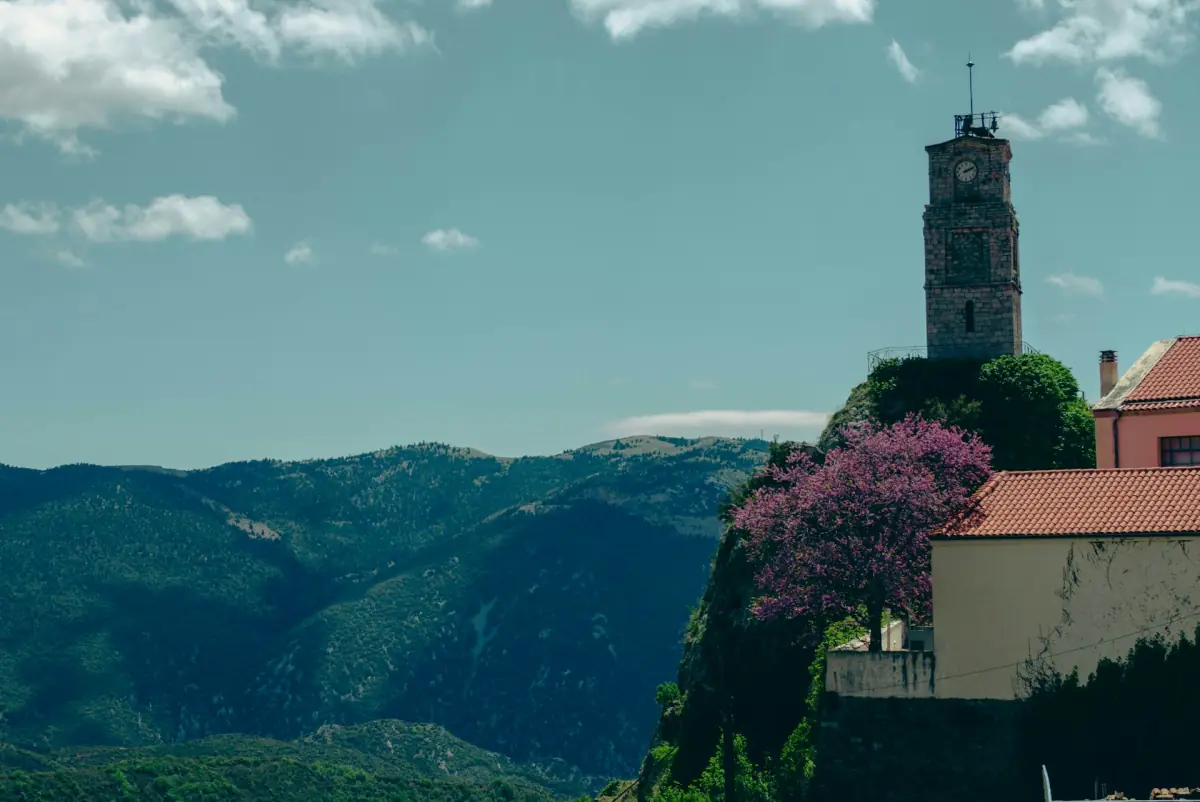
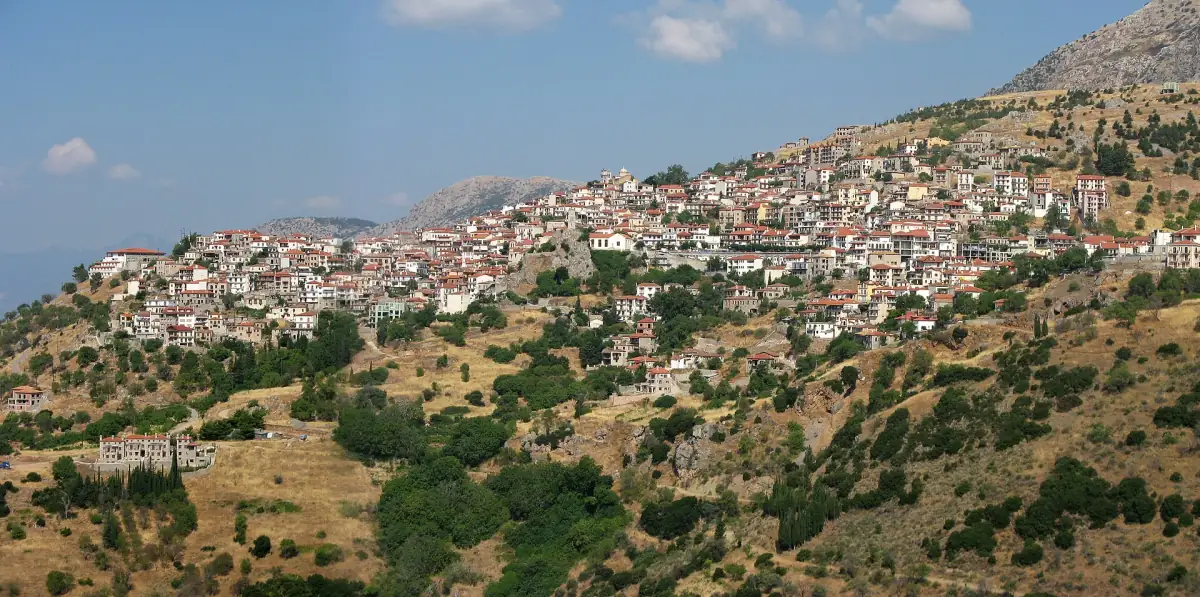
The introductory photographs on this page show Arachova in the surrounding region, rather than the monastery’s churches or mosaics. Use them for geographical atmosphere, then focus the monastery visit on the architecture and decoration that brought it into the World Heritage listing. For the ancient site’s separate chronology, continue to Delphi history.
Our pick: Delphi and Hosios Loukas
This private drive visits the monastery as well as Delphi; monastery admission is extra.
Hand-picked tours, booked through GetYourGuide. Prices are indicative starting prices in euros (as of October 2026). Tap a tour for live availability and the current price in your currency.
A regional drive with a monastery stop
The private Athens excursion includes Hosios Loukas, Delphi admission and Arachova; monastery admission and lunch are extra.
Looking at the architecture and mosaics
Begin with the building as a whole before concentrating on individual decorative details. The UNESCO emphasis on architecture, marble and mosaics suggests a useful order of attention: notice the spaces, then the materials and surfaces that define them. This makes the visit more coherent than collecting a quick series of photographs.
Leave room in the day for the interiors available at the time of the visit. A route through an active monastery also benefits from a quieter pace than a roadside photo stop. Keep the experience centred on looking and observing the setting, rather than expecting every room to form part of a fixed circuit.
The contrast with Delphi is particularly useful for a visitor interested in religious art. At the ancient sanctuary, architecture, offerings and oracle traditions belong together. Here, Byzantine architecture and decoration provide the central focus. The Delphi museum offers another way to compare objects with their original architectural context without confusing the two places.
A private day trip that includes the monastery
The ten-hour private excursion from Athens expressly combines Hosios Loukas, Delphi and Arachova. It includes a private vehicle, an English-speaking tour driver, a monastery visit and admission to the Delphi archaeological site and museum. There is also time for lunch in Delphi village at personal expense.
Monastery admission is extra. The driver accompanies the road journey as a tour driver, while licensed interior guidance is a different type of service. Choose this format when the priority is linking the three destinations by private transport. The private-tours guide compares that regional day with guided visits centred on Delphi itself.
Admission, timing and clothes
Check the monastery’s current visitor information for the intended date and the areas you want to enter, then leave a little flexibility around the stop. Its visit arrangements should be planned separately from Delphi’s ticket and museum calendar. This is especially useful on a day that includes both places and a substantial road journey.
For clothing, an independent church-visiting guide recommends covered shoulders and knees as preparation for the active monastery. Bring suitable layers with you so the stop fits comfortably into the wider journey. Think about practical clothing for both the monastery and the uneven ground at Delphi rather than packing only for the drive.
If travelling independently, arrange the outward and onward road journey as one plan. Hellenic Heritage gives about two hours by car from Athens as an orientation figure. For a stay based around Delphi, decide how the monastery stop fits the rest of the route; see transport planning and overnight bases before committing to a full programme.
Questions about your visit
Is Hosios Loukas on Mount Parnassus?
The monastery stands on Mount Helikon near Steiri in Boeotia, opposite Parnassus. Arachova is the mountain town associated with the slopes of Parnassus.
Why is Hosios Loukas a World Heritage site?
It forms a shared UNESCO property with Daphni and Nea Moni, inscribed in 1990. Middle Byzantine architecture, marble decoration and mosaics are central to its significance.
Does the private day trip include monastery admission?
The excursion includes the monastery visit, private transport and Delphi site and museum admission. The Hosios Loukas ticket is an additional expense.
What clothes are useful for the visit?
An independent church-visiting guide recommends covered shoulders and knees for this active monastery. Bring suitable clothing as part of the day’s preparation.