
Reading the Temple of Apollo at Delphi
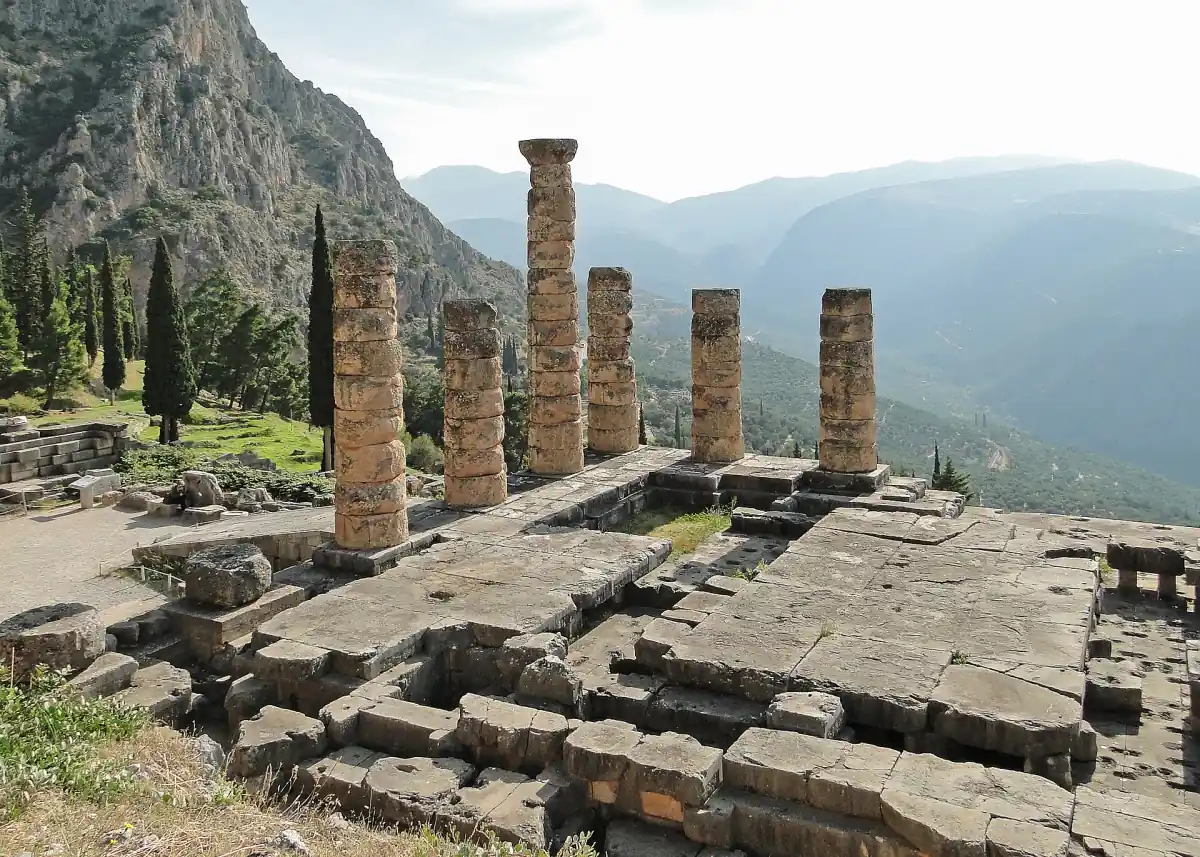
The Temple of Apollo at Delphi stands at the heart of the Apollo sanctuary, reached along the Sacred Way past treasuries and dedications. Its visible remains belong to the Doric successor of an earlier temple destroyed by an earthquake. Look at the platform and columns as parts of a building with distinct spaces, rather than expecting a complete temple interior.
The temple combines architecture with religious function. The Pythia’s oracular activity was associated with the area beneath the cella, while Delphic maxims belonged to the porch area. These historical descriptions help explain the plan; organise a present-day visit around the visitor paths and surviving remains. For the traditions themselves, continue with the oracle of Delphi, leaving this page to explain the building and its setting.
Our picks: guided Delphi visits
A local guide offers context for the wider site. Two private options also list admission, while the other does not specify it.
Hand-picked tours, booked through Viator. Prices are indicative starting prices in euros (as of October 2026). Tap a tour for live availability and the current price in your currency.
Flexible private visit to Delphi
- Private local guide
- Flexible customizable itinerary
- Entrance fees to all sites
The itinerary can be adapted for your group.
Check availability →
Delphi with a local guide
- Local guide
- Licensed guide
A licensed local guide accompanies the visit; admission details are not specified in the included services.
Check availability →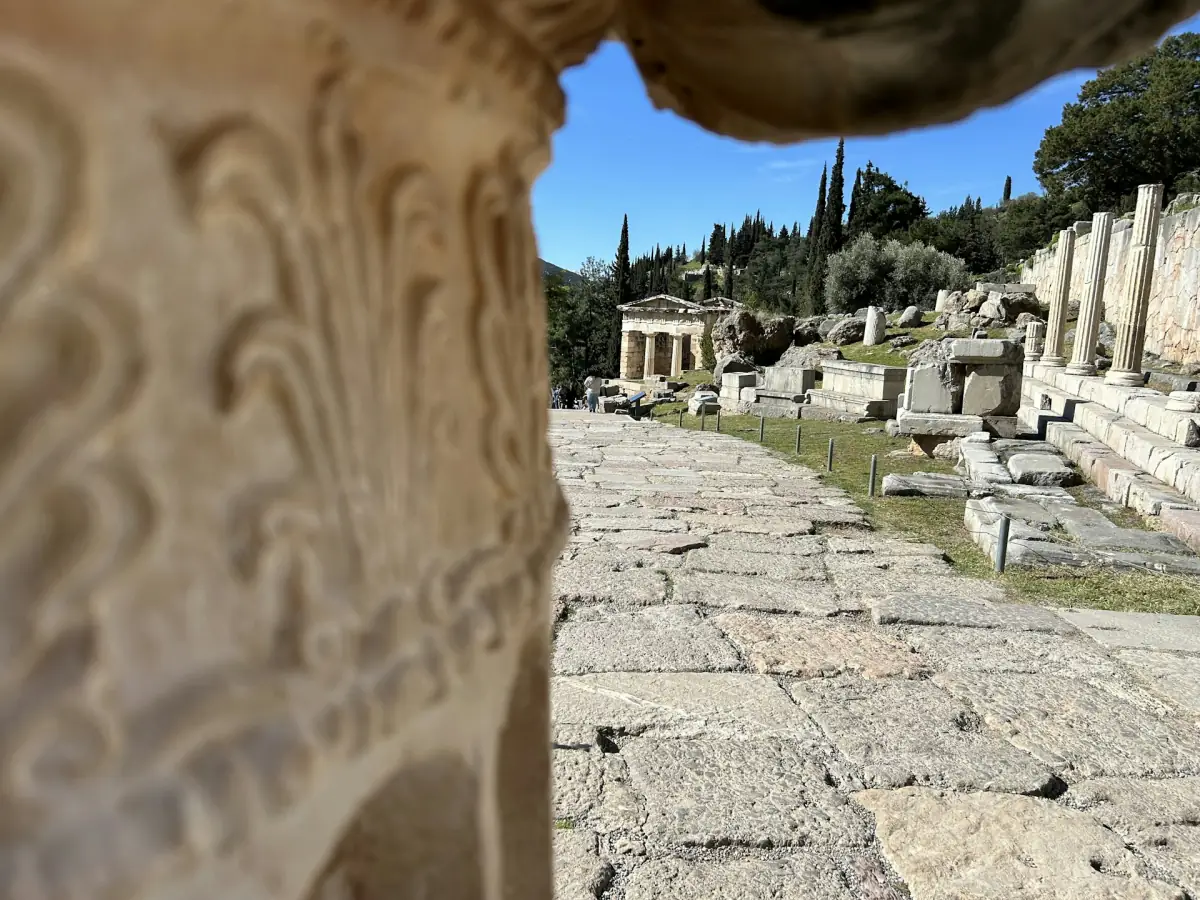
Private guided visit to Delphi
- Licensed local tour guide
- Museum admission ticket
- Archaeological site admission ticket
Visit the site and museum with a guide.
Check availability →Guided visits around Apollo’s sanctuary
Choose a licensed local guide, a guided visit with site and museum admission, or a flexible private itinerary with entrance fees.
Earlier temple and surviving successor
The heritage authority dates the archaic predecessor to 510 BC and its destruction by earthquake to 373 BC. The visible ruins belong to the replacement built in the fourth century BC. This distinction is useful on the ground: the religious site has a longer history than the single set of remains in front of the visitor. Rebuilding is part of the monument’s story.
The authority’s overview places the successor at about 330 BC. Its detailed account separates completion of construction in 334 to 333 BC from work on the pediment sculpture continuing to 327 BC. These references describe different stages, so think of a building programme with finishing work rather than a single moment when every element appeared together. The broader history of Delphi sets these phases within the sanctuary’s development.
Columns, porch and cella
The building was a Doric temple with an outer colonnade and six columns across the front. Its arrangement included a porch, the cella and a rear hall. This vocabulary offers a practical way to interpret the surviving footprint: distinguish the surrounding columns from the main inner room, and then consider how the approach related to those spaces. The ruins require an effort of imagination, but the plan gives that imagination a structure.
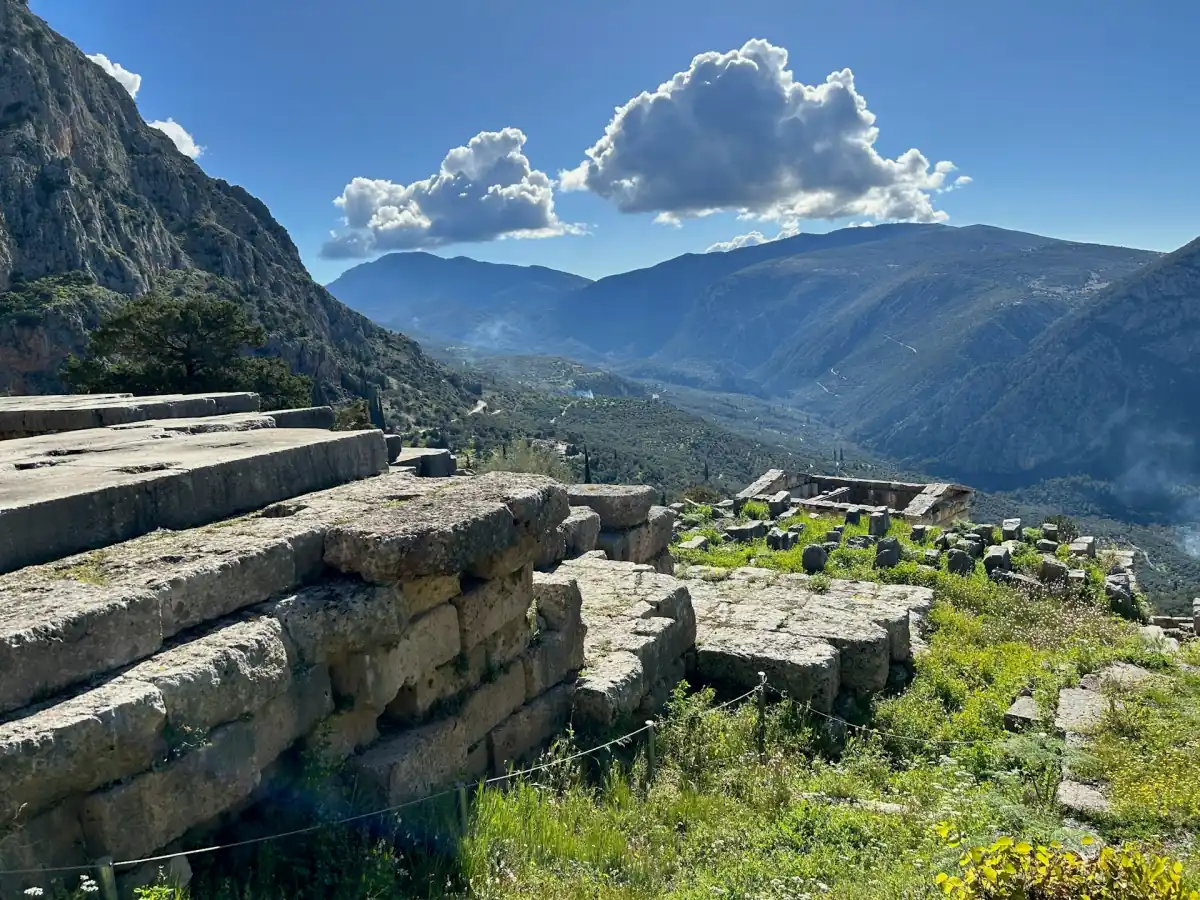
The association of the oracle with the area beneath the cella is a historical function, not a separate room to add to a modern sightseeing route. Stay with the accessible visitor paths and views of the monument. The same applies to adjacent ruin surfaces: an opening ticket concerns the archaeological visit, while barriers govern where people can actually walk.
Treasuries, theatre and the wider setting
The approach along the Sacred Way matters as much as the temple silhouette. Treasuries and votive monuments expressed the connections and public presence of Greek cities at the sanctuary. Seen together, the route and temple explain why Delphi was a shared religious centre rather than an isolated building on a hillside. Above the temple lies the theatre, with the stadium higher on the grounds.
The site guide explains how those areas relate and how to plan around current barriers. Pair the exterior with the museum collection for architectural sculpture and smaller dedications. Looking at the material remains in both settings is more useful than trying to reconstruct every missing part from the columns alone.
Choosing a local guide
The guided option with a licensed local guide includes admission to the archaeological site and museum and guidance throughout. Another private option provides a local guide, a flexible itinerary and entrance fees, meeting outside the main ticket window at the archaeological entrance. A further option supplies a local licensed guide. Choose by the specific service included, especially whether admission forms part of the package.
These are visits to the wider sanctuary, which provides the setting for understanding the temple. Use that broader scope when deciding how much attention to give architecture, objects and the religious story. For more private formats, the private tours guide separates local guiding from an excursion involving transport.
Distinguishing Apollo’s temple from the Tholos
The circular Tholos belongs to Athena Pronaia south of the modern road; Apollo’s temple lies in the sanctuary to the north. The Tholos has a different plan and its original function remains uncertain. A local report dated 31 August 2026, checked on 30 October 2026, described Athena Pronaia as closed, together with the stadium and Castalian Spring. Let current notices and barriers determine the visit rather than treating every monument photograph as an accessible stop.
Frequently asked questions
How many columns were across the front?
The ancient Doric temple had six columns across its front. This describes its architectural arrangement, rather than a count of all columns surviving upright today.
Is the round Tholos Apollo’s temple?
The Tholos is a separate circular monument in Athena Pronaia, across the modern road from the Apollo sanctuary.
How is access arranged for reduced mobility?
The heritage authority describes a special vehicle route up to the temple, with notice to the Ephorate at least 7 days beforehand. Plan that arrangement separately from museum access.