
Understanding the oracle of Delphi
The oracle of Delphi was associated with the Pythia, the priestess whose responses gave the sanctuary influence across the Greek world. Ancient consultations concerned matters such as founding colonies and going to war. Understanding this advisory role gives the ruins a purpose: Delphi was a place to which communities brought consequential questions, as well as a sanctuary filled with buildings and offerings.
A visit works well when you hold two strands together. Mythology explains how the Greeks imagined Apollo’s connection with Delphi, while material remains reveal the setting in which worship, dedications and consultation took place. Read the sanctuary as the setting for those practices, rather than expecting a present-day oracle performance. The archaeological site guide helps place the Sacred Way and temple within that landscape.
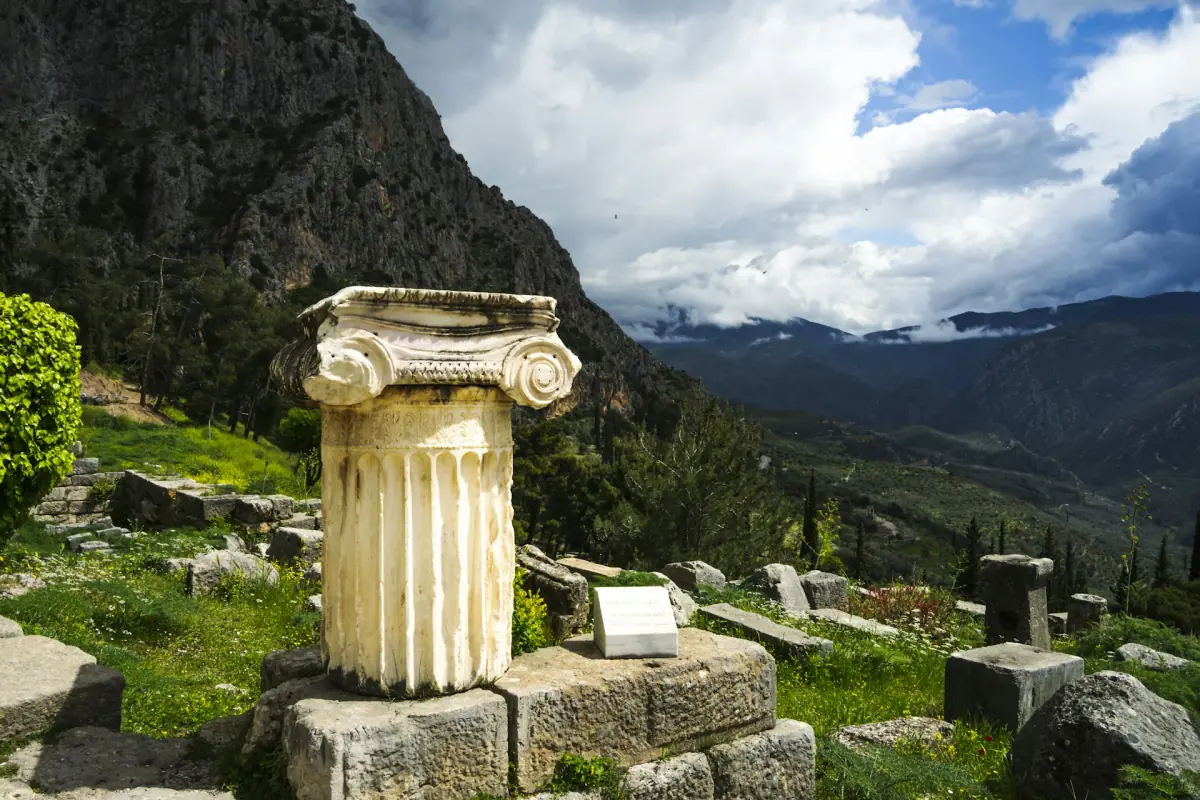
Our picks: guided Delphi visits
For context on the wider sanctuary, choose a private guide or a visit with an archaeologist. The listed options include admission.
Hand-picked tours, booked through Viator. Prices are indicative starting prices in euros (as of October 2026). Tap a tour for live availability and the current price in your currency.
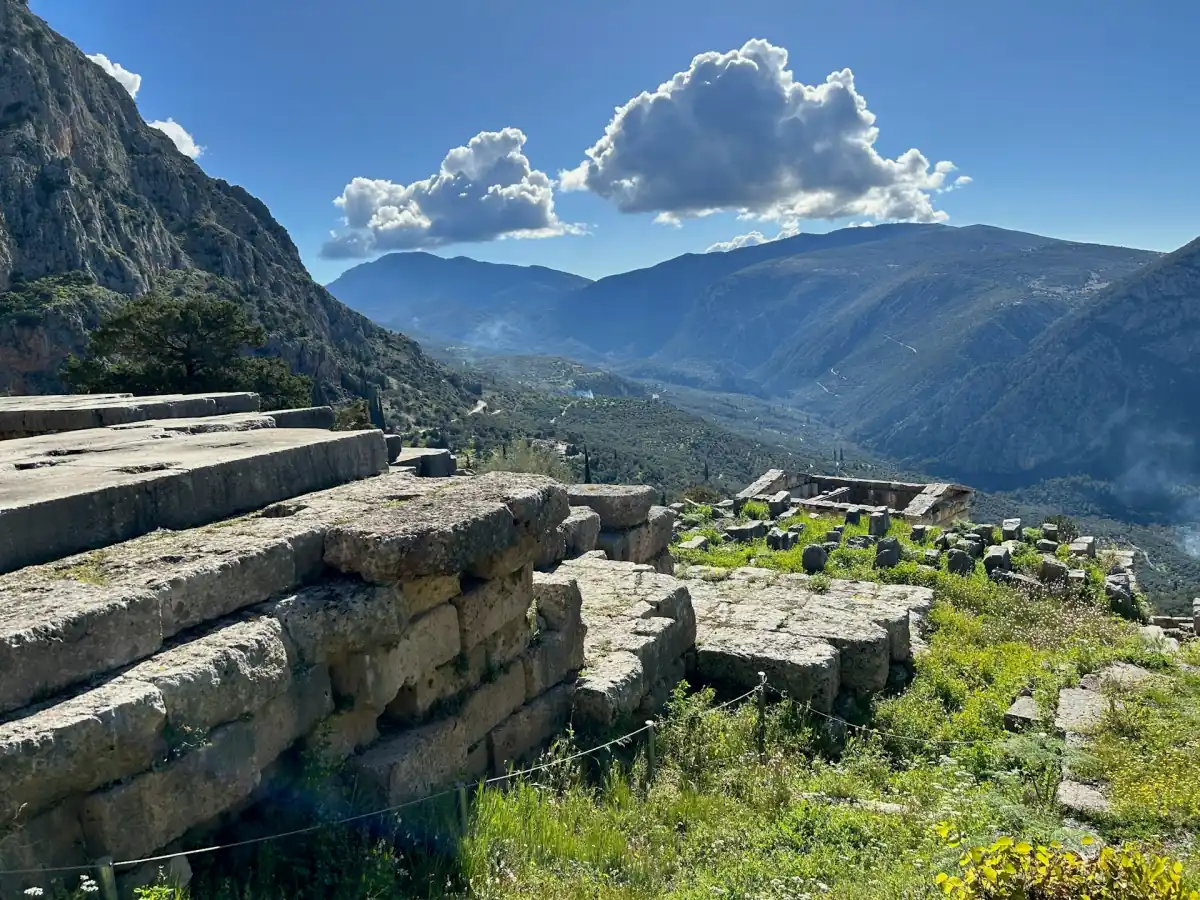
Flexible private visit to Delphi
- Private local guide
- Flexible customizable itinerary
- Entrance fees to all sites
The itinerary can be adapted for your group.
Check availability →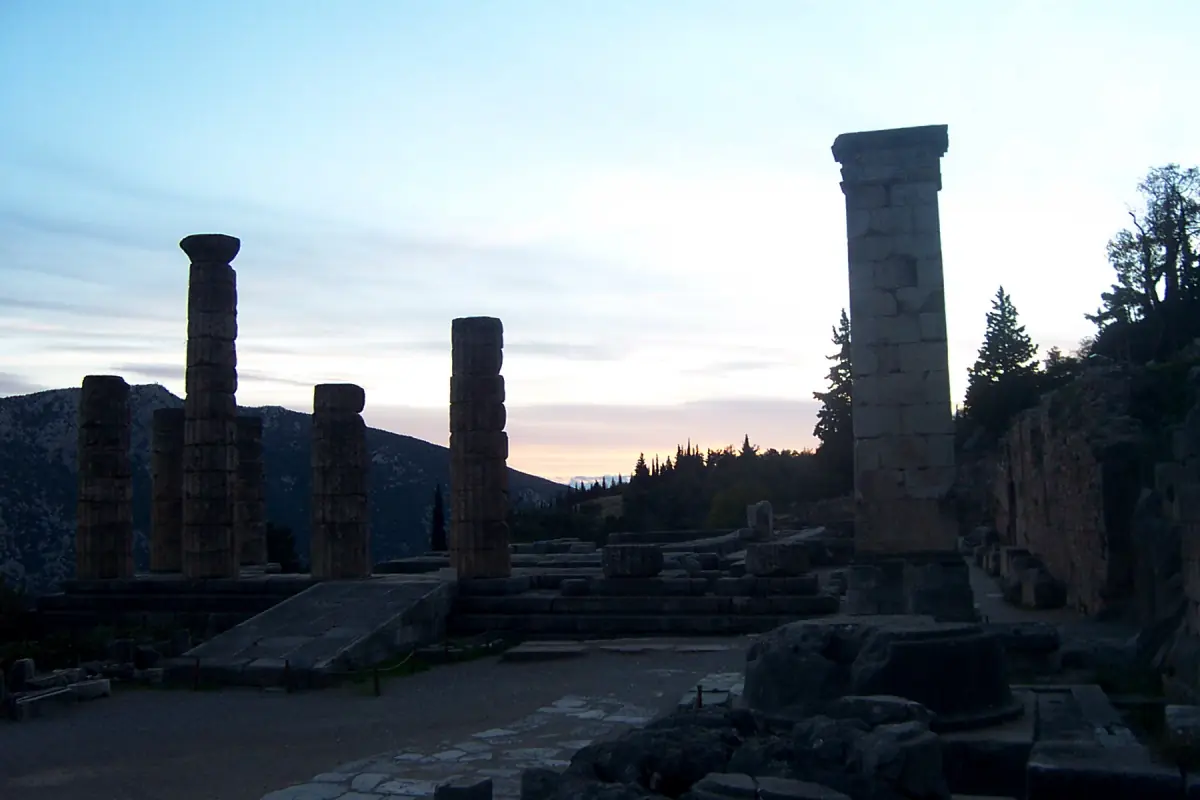
Delphi with a guide and archaeologist
- Professional guide and archeologist
- Museum and site entrance
- Bottled water
The visit includes admission to the archaeological site and museum.
Check availability →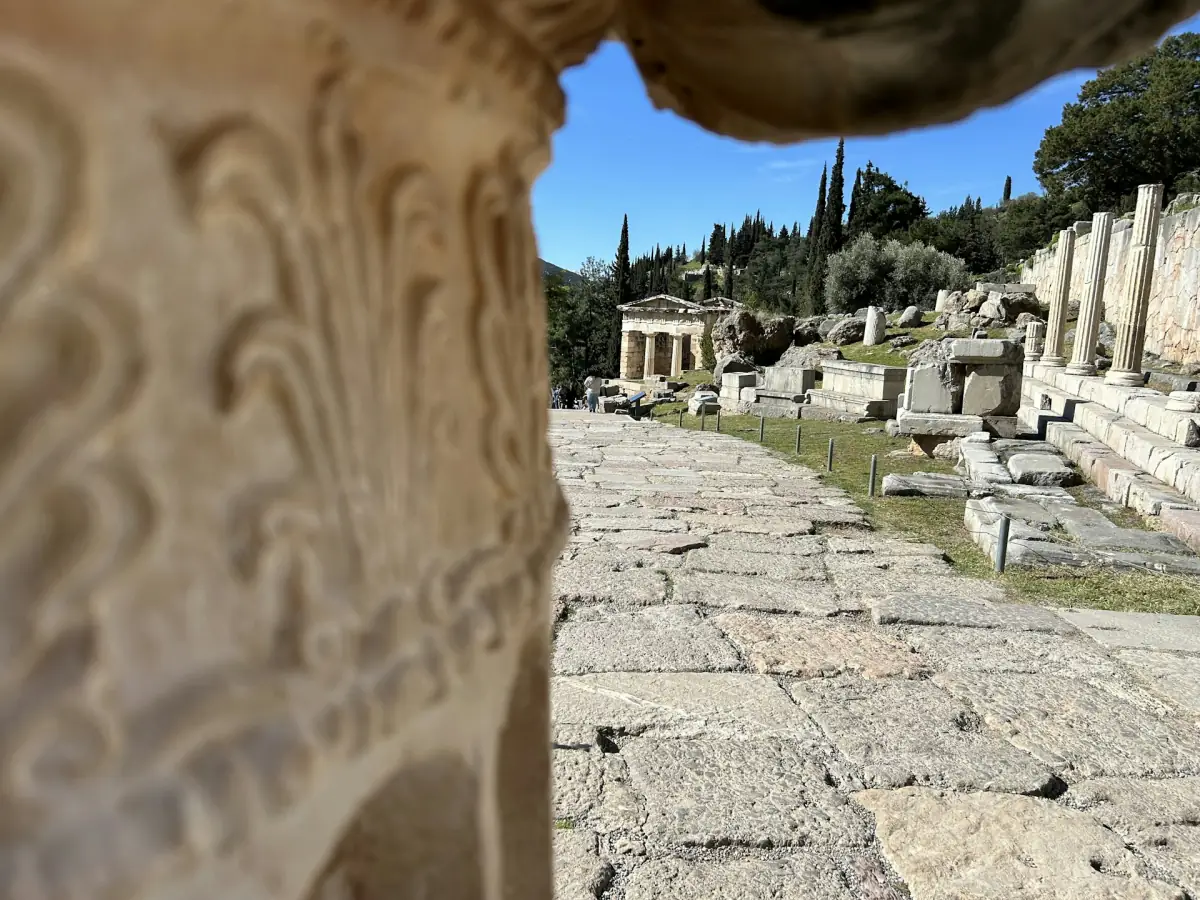
Private guided visit to Delphi
- Licensed local tour guide
- Museum admission ticket
- Archaeological site admission ticket
Visit the site and museum with a guide.
Check availability →Guides for the oracle’s sanctuary setting
Local guided visits connect the sanctuary’s monuments with its religious role. Compare included admissions, guiding and the flexible private option.
Delphi mythology: Apollo and Python
In Greek mythology Apollo defeated Python at Delphi. The story belongs to the sacred interpretation of the place; it should be approached as a myth, rather than an event established by excavating the ruins. It gives a visitor a way to understand why Apollo stood at the centre of the sanctuary’s identity, while leaving the archaeological evidence to answer different questions.
The idea that Delphi was the centre of the earth is another ancient sacred tradition. The Omphalos expresses that idea. Reading it as a symbol allows the myth to retain its meaning without turning it into a geographic claim. Keep this distinction in mind as guides and gallery labels move between stories, objects and historical interpretation. Myth and archaeology can enrich the same visit while serving different purposes.
The Pythia and the questions brought to Delphi
The Pythia’s role explains why the sanctuary mattered beyond the surrounding region. Questions about colonies and warfare connected religious consultation to collective decisions. Visitors can use that connection to read the treasuries and offerings along the Sacred Way: these were visible expressions of relationships with a place of shared significance. Delphi’s religious standing and the public presence of Greek cities belonged to the same landscape.
The temple is central to that setting. The heritage authority associates the Pythia’s oracular activity with the area below its cella. This is a description of ancient function; the present visit centres on the surviving monument and permitted paths. The Temple of Apollo page explains its building phases and plan. Detailed chronology belongs in the history guide, allowing this visit to focus on the meaning of consultation.
What the objects add to the story
The museum collection adds sculpture, architectural decoration and smaller votive objects to the outdoor setting. Such offerings show how devotion was given a material form. They also help explain why a sanctuary concerned with spoken responses could become a place of substantial buildings and works of art. Pairing the museum with the site turns an abstract story into an encounter with its surviving material culture.
The collection includes themes such as hymns to Apollo with musical notation and a cup depicting Apollo. Use those subjects to widen attention beyond a single famous story. The sanctuary’s religious life also involved images, music and dedications. Follow the current display and labels for the objects available during the visit, rather than planning around a promise that every historical selection will be on view.
Choosing a guided sanctuary visit
A licensed local guided visit includes admission to the archaeological site and museum and guidance throughout. The flexible private option includes a private local guide, a customisable itinerary and entrance fees, meeting outside the main ticket window at the archaeological entrance. These choices suit visitors who want the oracle placed alongside the monuments and the collection, with the level of personal guiding made clear.
The guide-and-archaeologist option includes admission to the museum and site and bottled water, with the guide meeting at the main archaeological entrance. Its value is interpretation across the sanctuary, rather than an oracle demonstration or a separate access right to a temple interior. For the wider distinction between local guiding and a transported excursion, see private tours in Delphi.
Keep the route grounded in today’s access
The Castalian Spring was connected with ritual purification, and Athena Pronaia forms another part of the sacred landscape. A local visitor report of 31 August 2026, checked on 30 October 2026, described the spring, Athena Pronaia and stadium as closed. Let the current barriers and notices determine the physical route. The religious story remains a useful framework even when the day’s walk follows a shorter set of accessible paths.
Frequently asked questions
Who was the Pythia?
The Pythia was the priestess of the oracle. Ancient consultation at Delphi included questions about founding colonies and warfare.
Was Delphi literally the centre of the earth?
The centre-of-the-earth idea belongs to ancient Greek mythology, with the Omphalos as its symbol. It expresses Delphi’s sacred significance.
What do the guided visits offer?
The assigned visits offer local guiding in the sanctuary context, with admissions included in the specified packages. They help connect monuments, objects and the oracle’s historical role.